
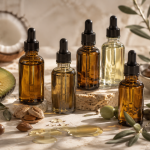
A cosmetic plant-based oil is a strategic raw material in the development of skin care and hair care formulations. Obtained by cold pressing or extraction from a seed, fruit or plant, it provides natural lipids that are essential to the structure of cosmetic formulations.
In cosmetic formulation, an oil is more than a simple additive: it is a functional ingredient. Mainly composed of triglycerides and unsaponifiable fractions, natural plant-based oils provide the lipid structure required to dissolve oil-soluble active ingredients, stabilise emulsified systems and enhance the formulation’s sensorial profile.
One of the main benefits of plant-based oils lies in their affinity with the structure of the skin’s hydrolipidic film and intercellular lipid matrix. The fatty acids found in these plant-based lipids share similarities with lipids naturally present in sebum and the skin barrier. This affinity contributes to good skin compatibility and helps maintain the integrity of the epidermal barrier.
Within an emulsion or an anhydrous product, the oil phase influences the rheology and overall sensorial profile of the formulation:
The incorporation of plant-based oils provides a wide range of physical and biological properties that are directly related to their molecular composition.
Plant-based oils act as high-performance emollients. By filling the spaces between corneocytes, they provide targeted nourishment and help restore the suppleness of the stratum corneum.
From a skin physiology perspective, the application of a uniform lipid film helps limit water loss. By reducing passive transepidermal water diffusion, the formulation helps preserve the skin’s moisture levels, a benefit that is particularly sought after in products for dry or mature skin.
Each plant or seed originating from a specific geographical area produces an oil with a unique lipid profile. The balance between saturated, monounsaturated and polyunsaturated fatty acids determines its spreading behaviour:
Variations in lipid profiles explain why two vegetable oils derived from different botanical sources will not behave in exactly the same way within a formulation.
For a research and development laboratory, selecting a cosmetic lipid ingredient requires consideration of strict physicochemical parameters to ensure industrial feasibility and finished-product stability.
Molecular structure directly influences the shelf life of the formulation. The presence of multiple double bonds in oils rich in polyunsaturated fatty acids increases their sensitivity to oxygen, light and heat.
The formulator must assess oxidative stability to anticipate rancidity. The strategic addition of antioxidants is frequently required to stabilise sensitive oils and maintain the organoleptic properties of the product over time.
Classifying oils according to their absorption rate and skin feel makes it possible to adapt the texture to the product’s intended positioning. Evaluating characteristics such as spreadability, absorption, residual feel and richness helps predict whether an oil will feel light or enveloping on the skin or hair.
Meeting the requirements of the natural cosmetics market involves the careful selection of supply chains:
Thanks to their versatility, plant-based lipids can be incorporated into a broad range of cosmetic formulations.
In face and body skin care, oils are incorporated into creams, fluids, dropper serums and massage oils. They provide nourishment and protection for dry, reactive or mature skin while helping adjust the texture of emulsions.
To support the development of your product ranges, discover our emollient solutions and our ingredients dedicated to skin care applications.
In hair care, incorporating an oil-based ingredient helps smooth the cuticle, enhance shine and coat the hair fibre. Oils can be formulated into pre-shampoo oil treatments, finishing serums for the ends of the hair and conditioning products.
Discover our technical ingredients for hair care applications.
The make-up sector uses plant-based lipids to ensure the effective dispersion of pigments in foundations, mascaras and lipsticks.
In solid cosmetics, oils and solid butters are essential for structuring waterless sticks, balms and solid care products.
Cleansing oils use the affinity of oil-based ingredients with other lipids to dissolve sebum, make-up and UV filters. When formulated with an appropriate surfactant, they rinse easily with water without leaving an uncomfortable residual film.
As a recognised expert in lipid chemistry, SOPHIM offers laboratories an extensive range of plant-abased oils that meet the regulatory and technical requirements of the cosmetics industry.
Highly valued for its linoleic acid content and phenolic compounds, grapeseed oil provides a dry skin feel and excellent fluidity. It is particularly suitable for lightweight facial care products and balancing formulations.
Naturally rich in essential fatty acids and phytosterols, soybean oil is a versatile ingredient that helps enhance the emollient properties of body care products and improve the spreadability of emulsions.
The SOPHIM catalogue includes numerous other botanical references suited to the most demanding formulation specifications:
Each ingredient is selected according to strict quality and traceability requirements, with conventional and organic grades available depending on the reference.
As a trusted partner to leading cosmetic laboratories and brands, SOPHIM has developed its offering around comprehensive expertise in the lipid value chain.
Based in France, SOPHIM applies its expertise in lipid processing, purification and blending. Our advanced knowledge of lipid chemistry enables us to provide ingredients with consistent purity, meeting the requirements of cosmetic formulation worldwide.
As a committed manufacturer, SOPHIM places the circular economy at the heart of its production model. We recover and transform co-products from the olive industry, helping reduce the environmental impact of our ingredients while ensuring responsible sourcing.
Choosing SOPHIM means benefiting from tailored support. Our teams assist you in incorporating our emollients and antioxidants, help you anticipate cosmetic market trends and provide ingredients that meet recognised certification requirements.
Make SOPHIM your strategic partner for the development of innovative, high-performance cosmetic products designed with respect for nature.